Saturday, 30 October 2010
Superb diamond dust display in Austria
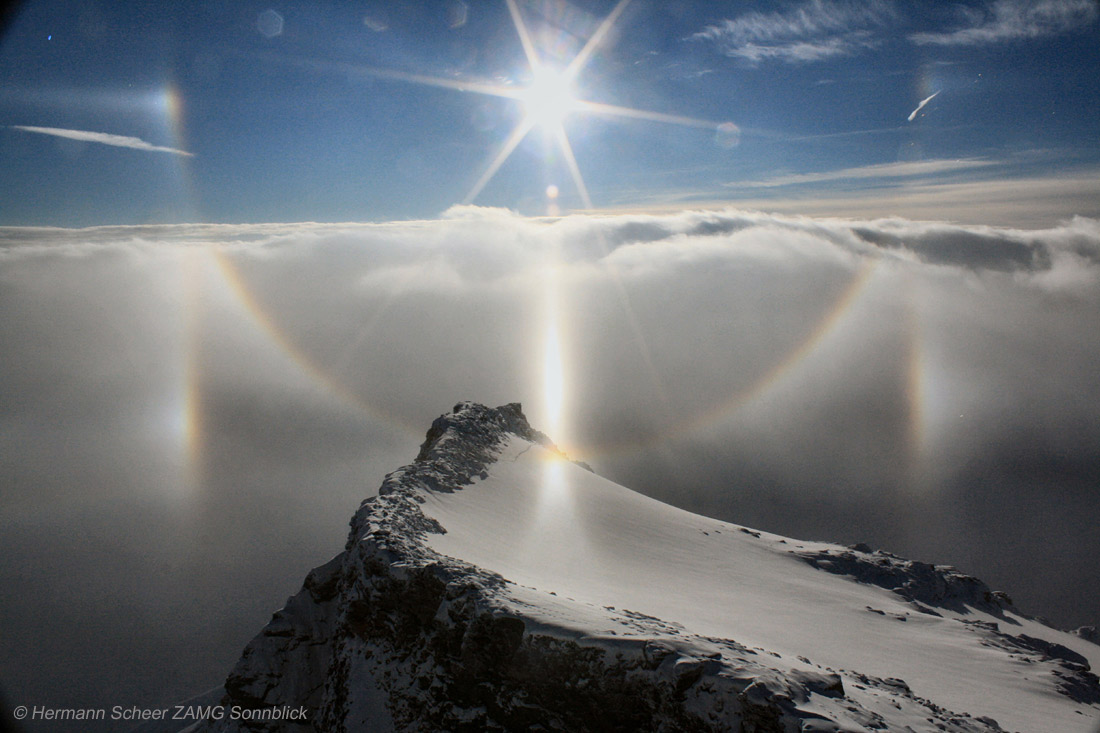
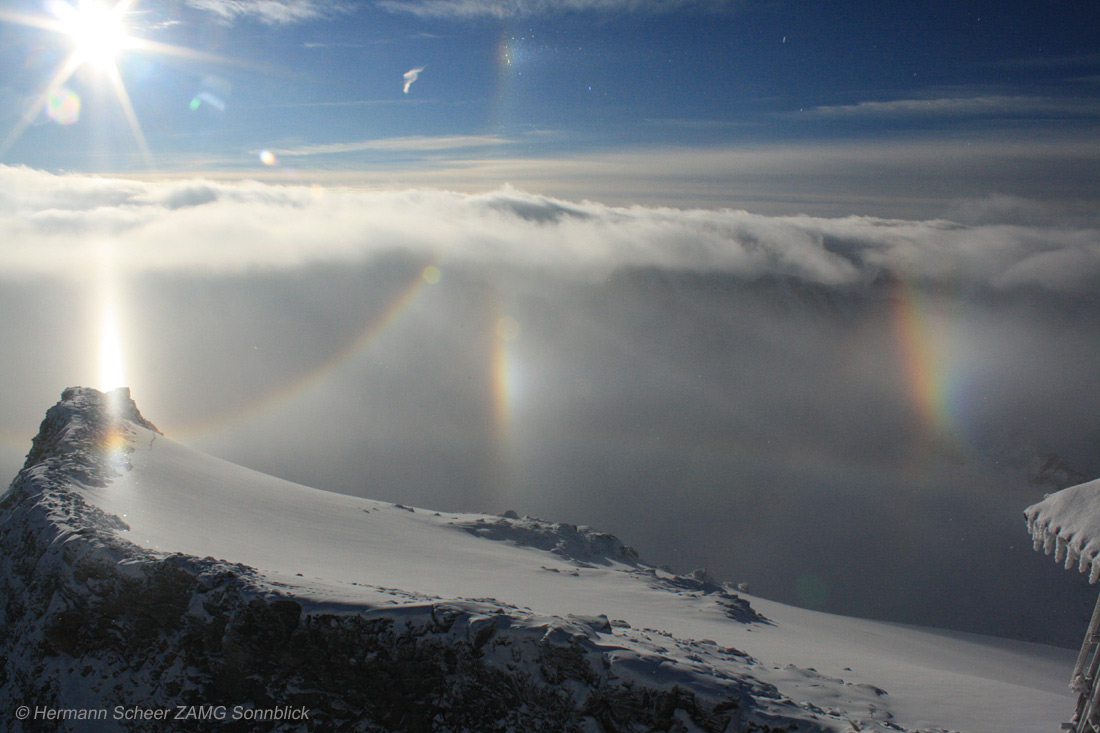
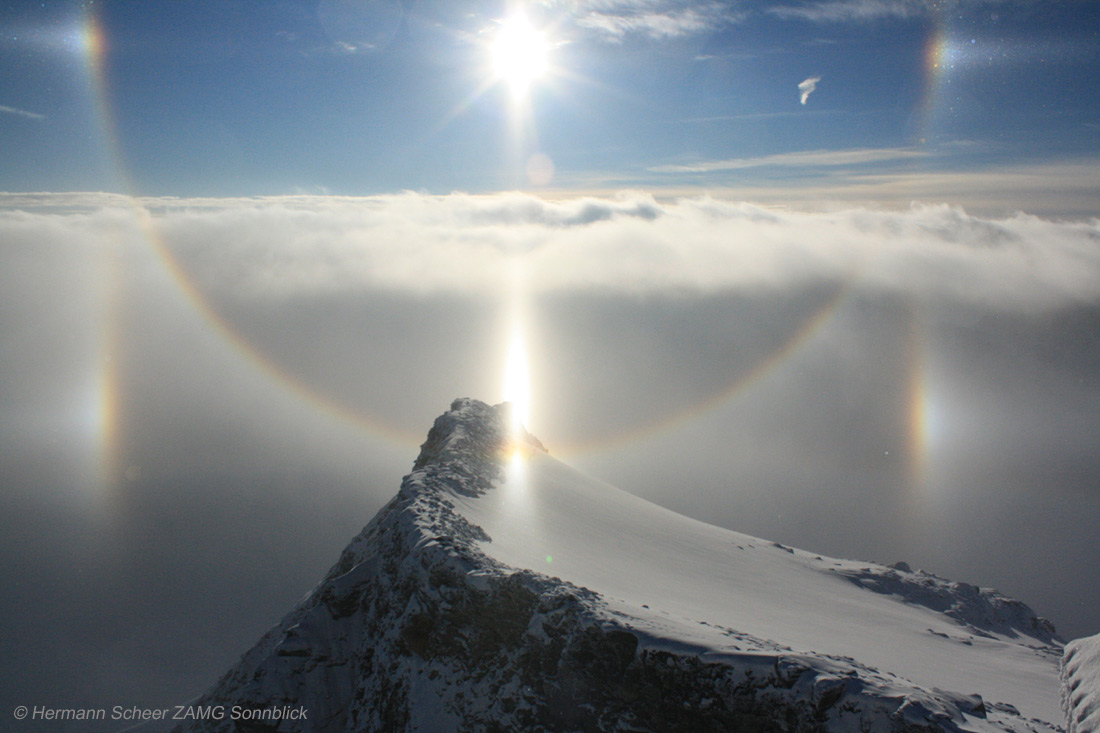
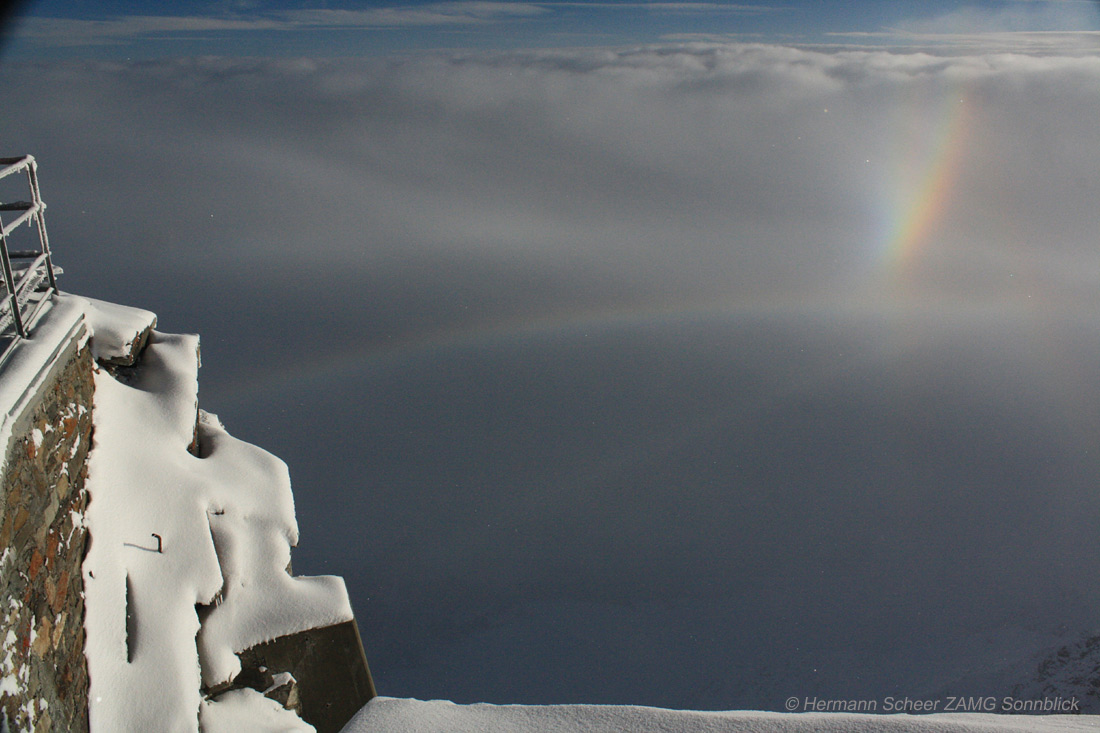
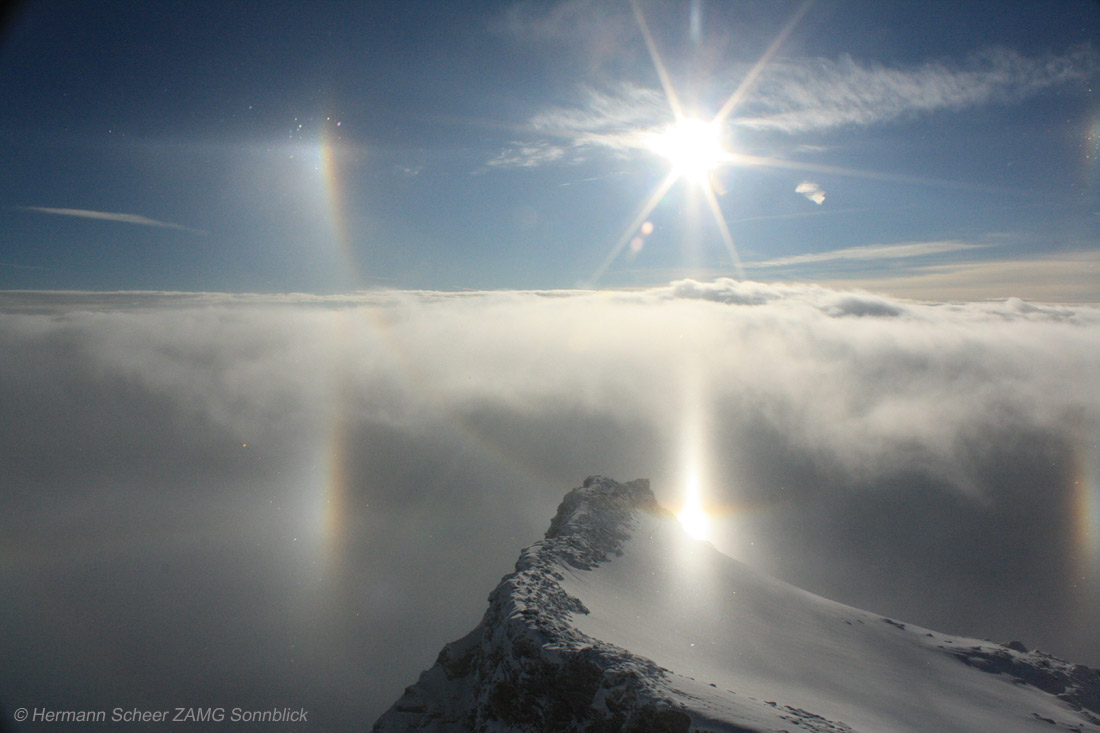
On 18 October 2010 a superb diamonddust halodisplay was observed at the meteorological station Sonnblickobservatorium ( 1 ) in the Austrian Alps (3106 m, 12°57’ E, 47°03’ N). Hermann Scheer, member of the meteorological team at the observatorium, took images of 13 different haloforms between 08:30 and 09:00 CEST (06:30 and 07:00 UT): parhelia, 22°-halo, 46°-halo, lower tangent arc, subsun, subparhelia, infralateral arc with Parry-infralateral arc, supralateral arc, parhelic circle, subparhelic circle, subhorizon Wegener arc and helic arc. ( 2 - 3 - 4 - 5 - 6 ) The images were taken at a sun elevation of 8,9° to 10,3° between 08:31 and 08:40 CEST, the file names indicate the exact time.
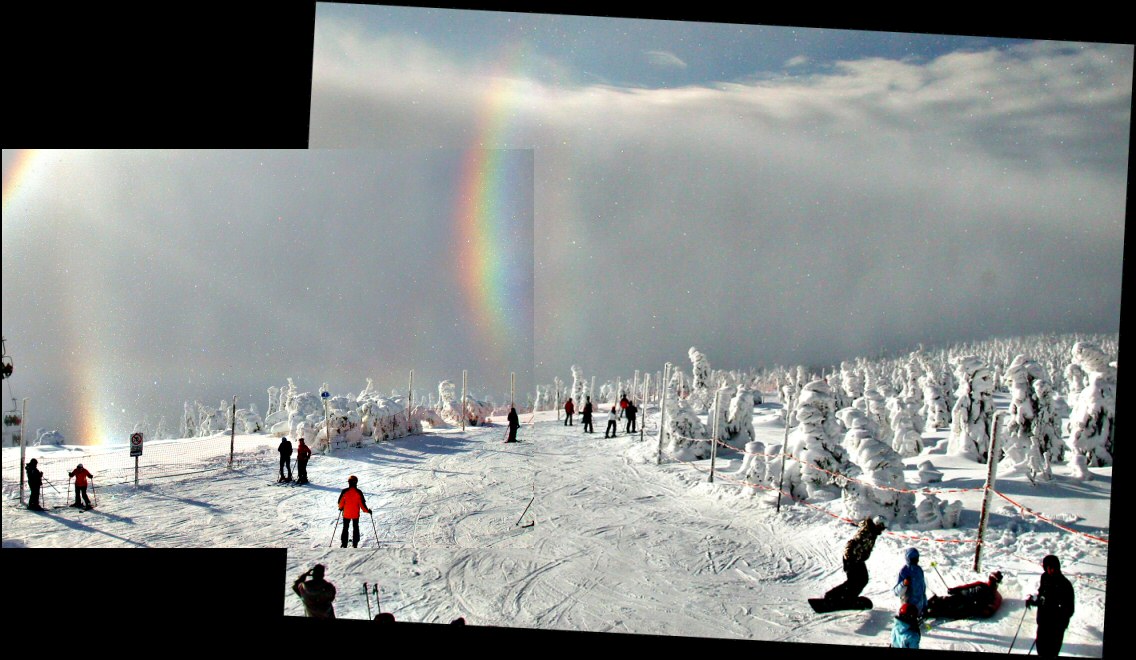
The brightness of the Wegener arc was incredible. Very interesting is the combination of Parry-infralateral arc with infralateral and faint supralateral arc. This part of the phenomenon is similar to an observation in the Czech Republic (26th of December, at Lysa hora in Krkonose (Giant Mountains)), described at Optické Úkazy v Atmosférè ( 7 - 8 ) Thanks to Tomas Trzicky for the links. And also in Ice Crystal Halos ( 9 ). In this very small area of the display we can see a 46°-halo, Wegener arc, helic arc and the subparhelic circle too.
The display was observed at the upper boundary of the stratiform layer; weather conditions: 06:00 UT - air temperature -6,8°C, air relative humidity 96%.
Credit to Hermann Scheer for giving the permission to show his images at Crystal Halos Blog under this licence: ( 10 ). Homepages of Hermann Scheer: ( 11 - 12 - 13 ). This diamond dust display is described on the page "Atmospheric phaenomenons observed in Austria" too: ( 14 )
Karl Kaiser
Wednesday, 22 September 2010
Wegener from Altai Krai
The photo of these Wegener-arcs was taken in the Siberian Altai Krai by Alexander Kostenko on 12 August 2010. Further images can be seen in his album ( 1 )
Wednesday, 4 August 2010
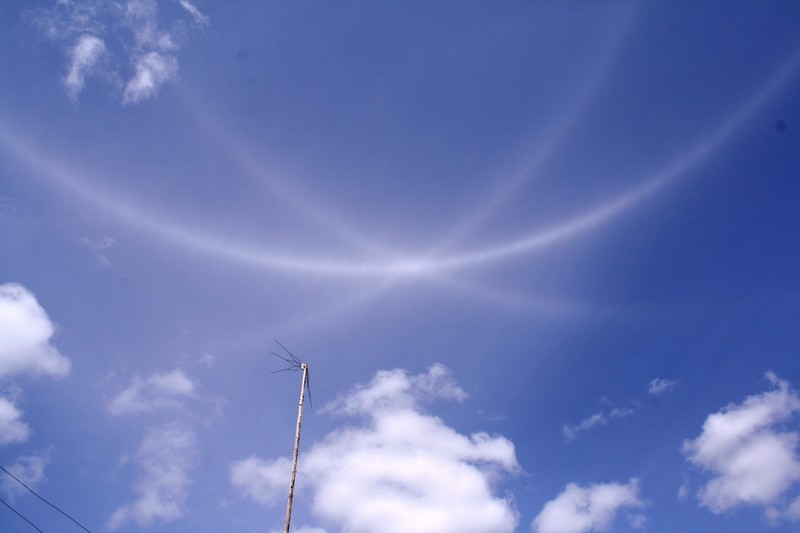
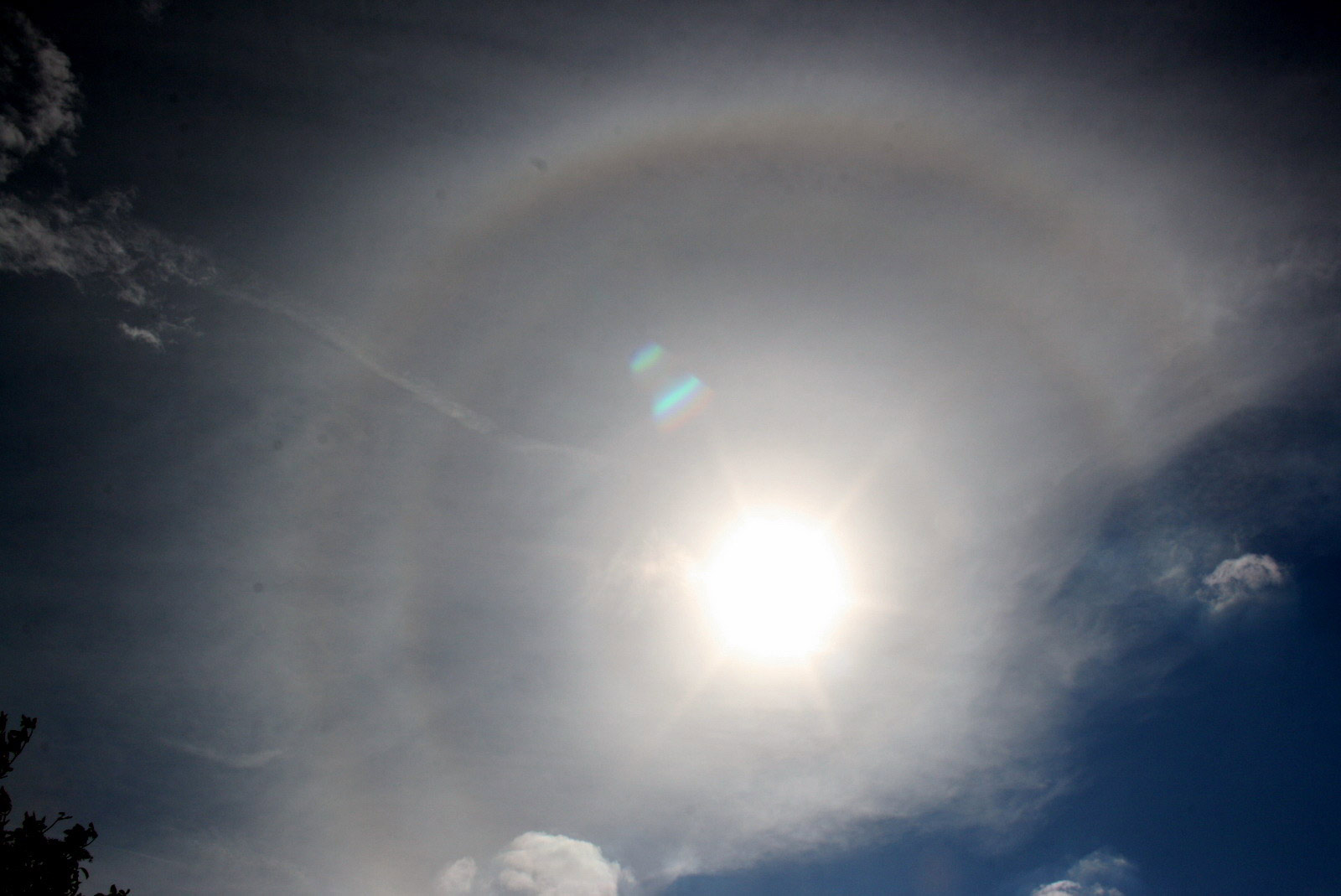
Hungarian odd radii
These odd radius rings and arcs were photographed on 24 July 2010 by Róbert Rosenberg in Adony, Hungary. The photos were taken a few minutes after 14:35 CEST, and about two hours later. ( 1 )
Saturday, 24 July 2010
Moilanen arc without snowguns
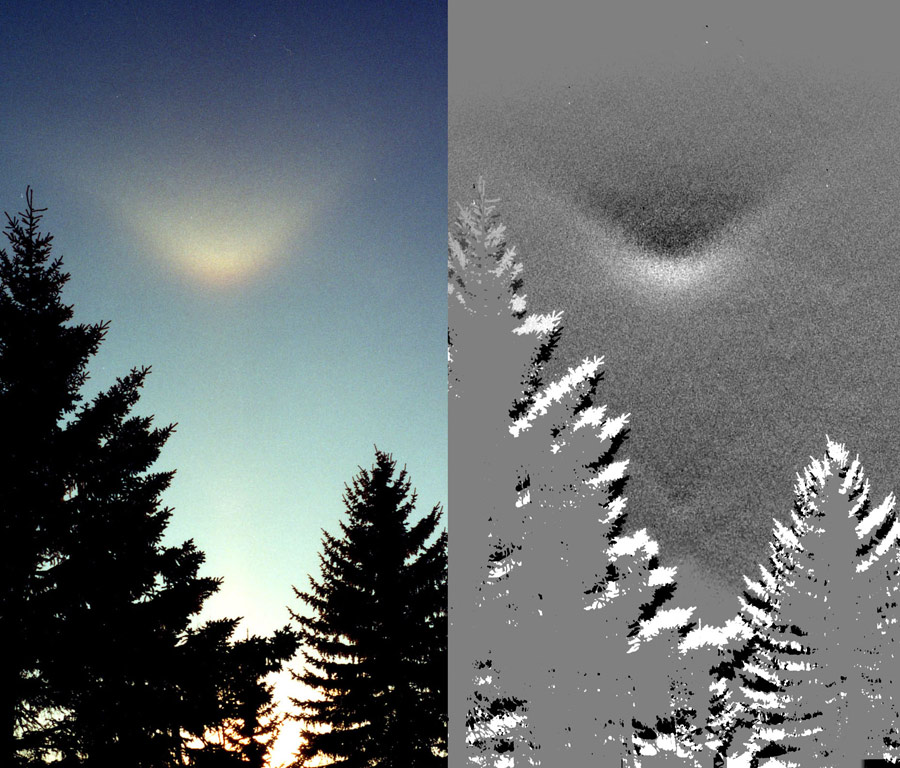
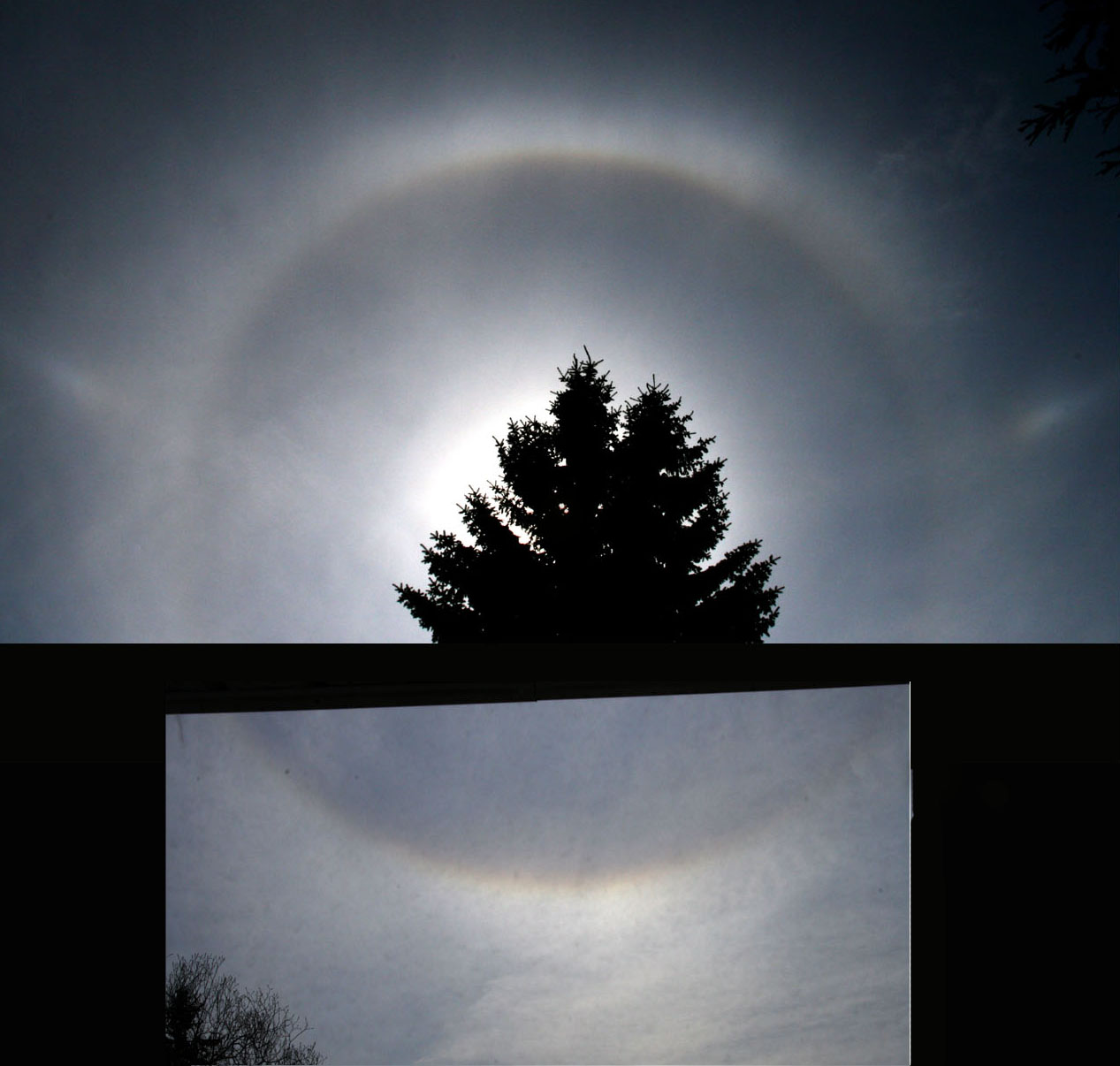
I was recently filing images digitized from somewhat older slides and came across this upper tangent arc image from many years ago, in the early morning from here in Calgary. I decided to subject this image to some processing, in particular, embossing the image in Photoshop and low and behold, a faint Moilanen arc showed up, as you see in this composite image!
I certainly do not live anywhere near to a ski slope or factory chimney that would produce lots of ice crystals. There is no evidence on the photo of local ice crystals as we see often in diamond-dust displays. The climate here is very dry and we often find low-lying layers of diamond dust particularly over our river.
Thus, I hesitate to claim that this is a "natural" Moilanen arc but it was not taken near to ski slopes. Maybe our furnaces produce the requisite crystals sometimes, in which case I will be on the lookout next winter for a repeat of this display.
Alan Clark
Tuesday, 6 July 2010
Suggestion of observation: possible spurious arcs from Moilanen crystals
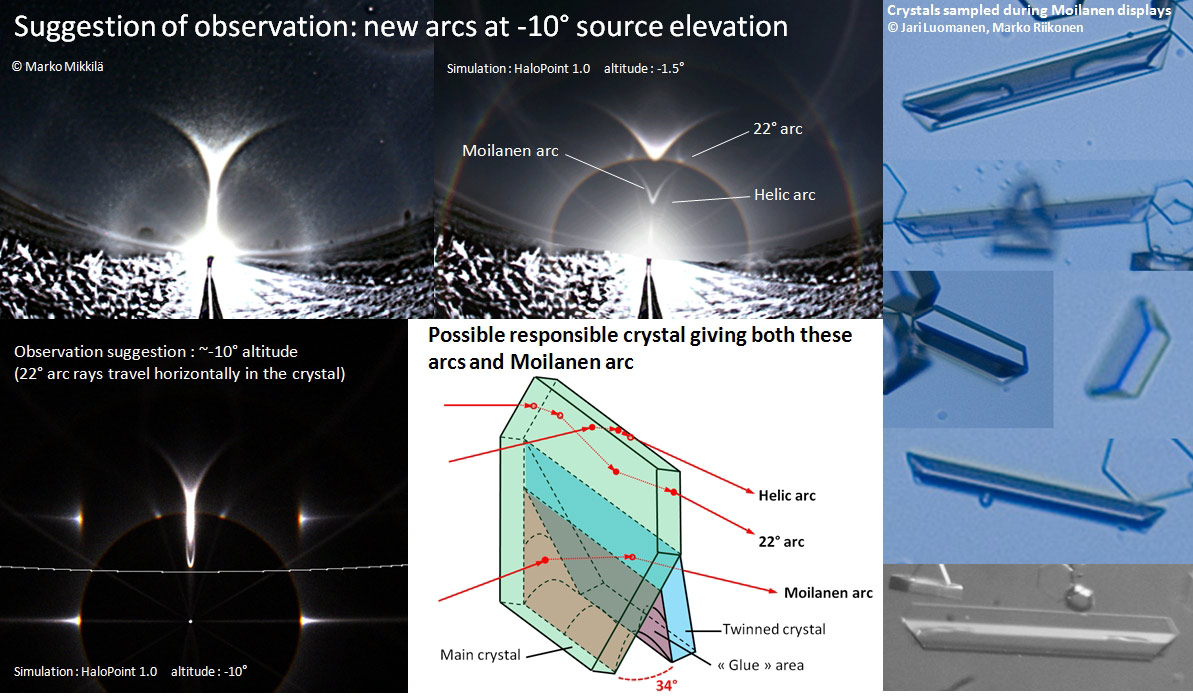
Here is an observation suggestion for next winter. Marko Mikkilä photographed possible new arcs during winter 2007-2008 ( 1 ). Source elevation was -1.5°. Different processing shows them as not only 22° arcs but also new helic arcs.
Some twinned crystals allow creating both similar arcs and Moilanen arc so these arcs could be spurious arcs from Moilanen crystals. Such twinned crystals are present in small amount in samples from Moilanen display. I have put the best images in the main picture. The crystals seem to be two twinned plates with a glue area in between them. Even few of these crystals could give significant Moilanen arc as the ray path is extremely efficient, even more efficient than parhelia ray path (for a plate crystal, rays go mostly in the helion, then in the left/right parhelia/subparhelia and parhelic/subparhelic circle while almost all the rays entering such twinned crystal go in the Moilanen arc (not in the helion)). The 22° arcs would be from rays entering and leaving the small upper tilted prism faces (with total internal reflections in between). The helic arc is mostly from total internal reflection on the small upper prism face.
Some reasons also tend to show that the actual fall orientation of such crystal is with the prism pointing up (and not pointing down like it was thought before).
If this is true, we can deduce that best configuration to see these arcs again is with source elevation around -10°. In this case, 22° arcs rays travel horizontally inside the crystal and so are more likely to exit (as the main habit of the crystals seems to be long needles), helic arcs should also be stronger, and tangent arc is narrow (so well separated from these arcs). However Moilanen arc should be difficult to distinguish from subsun and divergent light pillar.
For similar lower arcs, the best configuration would be source elevation around 10°. However lower arcs are less likely because of the “glue area” messing with the basal faces for total internal reflection.
It would be really interesting for people who have the opportunity to try to get other observation of these arcs next winter. They should be most visible at source elevation around -10° and vanish quickly for positive source elevation. If these arcs are spurious arcs from Moilanen crystals, it would definitely help finding the responsible crystals.
Nicolas Lefaudeux
Friday, 2 July 2010
Odd-radii again

Alan has sent another pair of odd radius halo images. These were taken from Calgary, Alberta, Canada in May, 2009. ( 2 - 3 )
Tuesday, 29 June 2010
Pyramidal halos in central Virginia
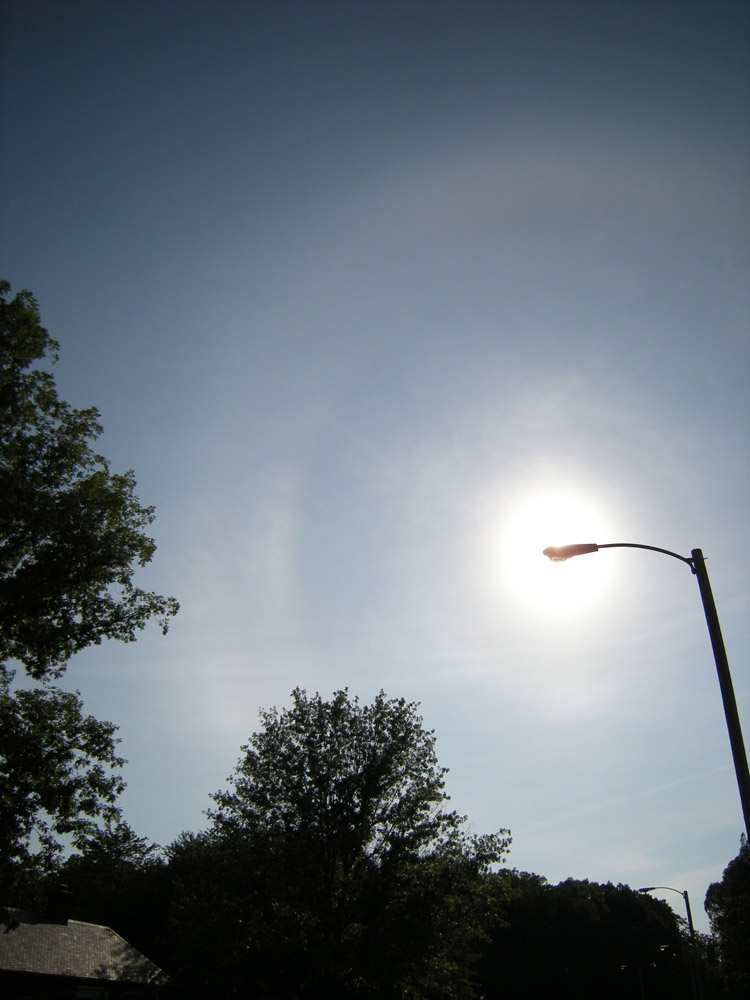
Elmar Schmidt was travelling southwards after the 10th Conference on Light and Color in Nature in Maryland. He observed this spectacular pyramidal halo display in central Virginia on 22 June. The display lasted for at least 2 1/2 hours and showed several odd radius halo rings and their tangent arcs.
As Elmar Schmidt tells: "All in all the phenomenon looked spectacular and eery with the broad belt starting at the 18-deg-radius. Of note is also its quite southerly location and the longevity, which might be interesting to compare with simulations, especially at the sun's elevation of 57 degrees." ( 1 )
Further images of the display between solar altitude 54 and 29 degrees are also available ( 2- 3- 4- 5 )
Subscribe to:
Posts (Atom)