Friday, 14 January 2011

Streelight Bottlinger in Kangasala on 9/10 January 2010

If there is a holy trinity for a halo man, it must be the appearance of streetlight pillar and Bottlinger's ring. The night we saw this with Jari Luomanen we had given alreaydy up the halo hunt at Sappee ski resort and were returning home. But on a way back Jari thought of seeing something resembling 22 tanget arcs in the Kangasala lights and we went to take closer look. It was not tanget arc - the lamp pillar was accompanied by a steep V-figure, of a kind which we had never seen before. We started photographing, although in the beginning we had swells of  suspicions of it being just a lamp artefact. However, as the effect later clearly showed on some other lamps, this was not a worry anymore: it was a halo. But what halo, that was not competely clear until later when the halonight was already over.


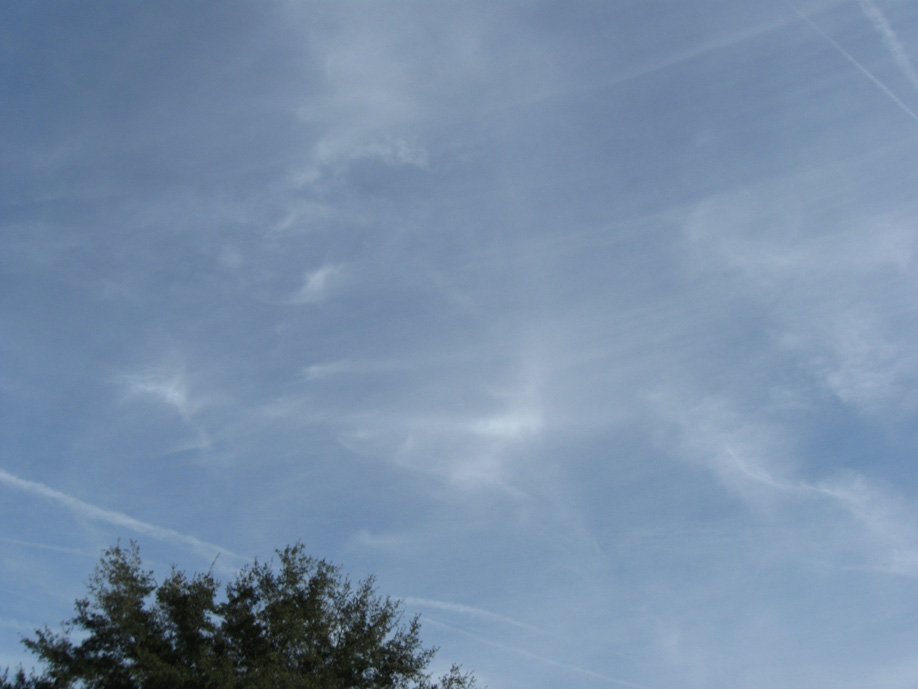
The stuff formed from nucleating water fog at -16 C. The area where the nucleation took place was perhaps about a square kilometer and within it, only at a small, say, two hundres square meter area was the Bottlinger seen. Elsewhere it was just pillars (the first photo above shows just pillars, but to the right from the photo a Bottlinger was seen constantly from a lamp only about 100 meters away). And outside that water fog was everywhere. Anyway, the Bottlinger was seen in the same spot for 4 hours at the Kangasal industrial area. We drove a bit around returning always to same place.

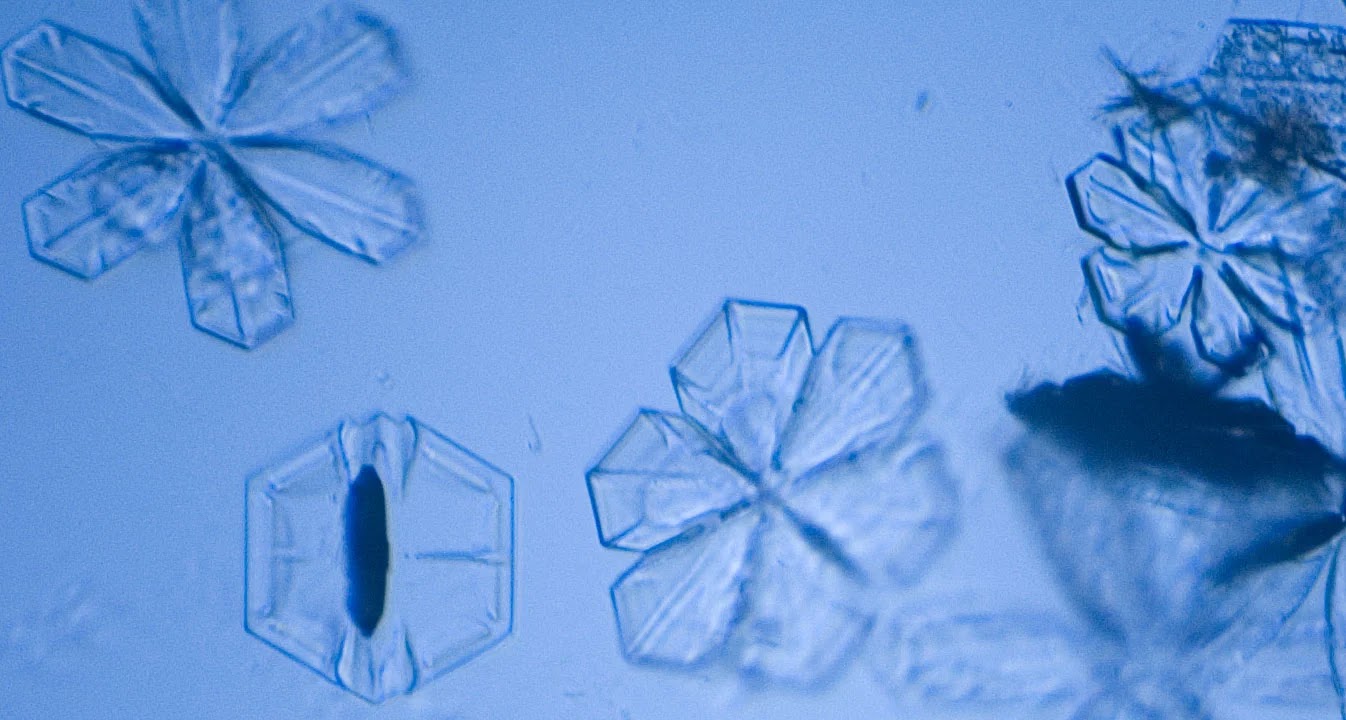
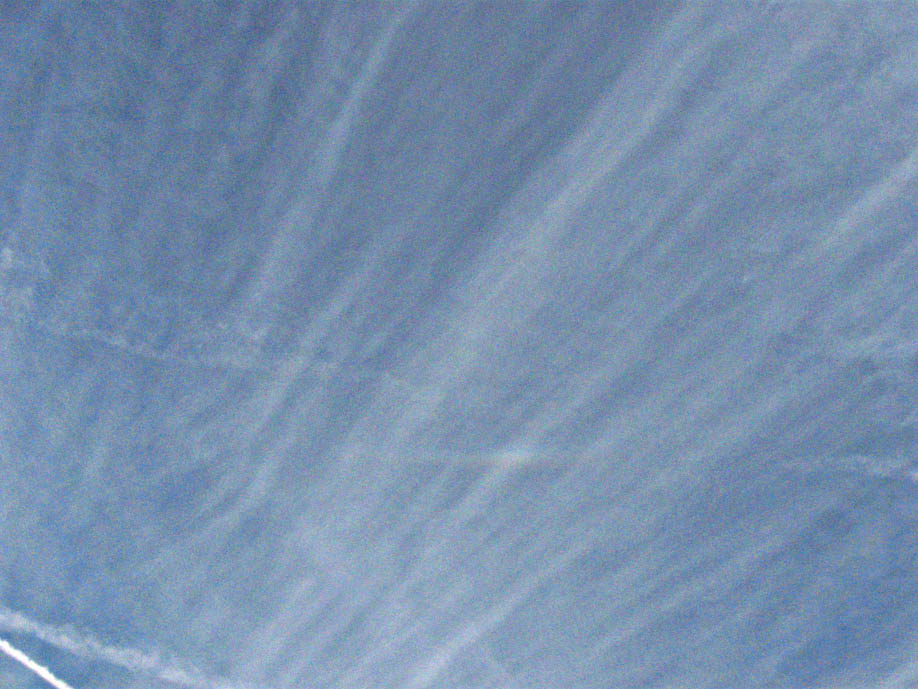
Some variation can be seen in the photos in the angle of the V when a time lapse movie is made. I took crystal samples and above are plenty of photos of those crystals. For some reason all turned more or less blurry, but one can still make out details of them.  Is it only me, or are the branches of many crystals slightly sloping towards the ends? That low angle would provide the reflecting surface for the Bottlinger in horizontal crystals.


Now Bottlinger's ring is just a helic arc from crystal angles that do not deviate much from the horizontal, but in this display there was also another helic arc, as shown by two photos above. This one probably has the same angle as the normal helic arc from Parry crystals. Non-Parry helic arcs are common - they have been seen with only a pillar.

Original post in Submoon


Wednesday, 12 January 2011

What is the first record of a halo from Lowitz orientation with 315 /325 raypath?


By Marko Riikonen

I am wondering what is the first record of halo from Lowitz oriented crystals with raypaths 315 and 325 respectively above and below parhelion? It has been called as "reflected Lowitz arc" and parhelion legs and arms. People are also calling it just Lowitz arcs, but it is not the same halo as Lowitz arcs which have 35 raypath. (From Parry orientation 35 make the Parry arc and 315/325 the Hastings arc and from column orientation you get tangent arc and Wegener arc). Above are some some early observations related to this halo.  First is observation by Gösta Liljequist in the Antarctic on 13. May 1951 of the 315 arc. I have included also simulation (made with HaloSim software) and crystal figures depicting the raypath of this arc. That is a pretty realible looking observation. Second is a photo from the French Greenland expedition, taken on 21.7.1951. These are peculiar looking parhelia and one could argue that there is actually no parhelia at all, but this is less convincing documentation for the 315/325 arcs. The photo is from Readers Digest world map book from the 70's (thanks for Jukka Ruoskanen for scanning it). Third is photo by Emil Schulthess in the antarctic in 1957 from Scientific American 1962 September issue. Here we are seeing the 325 arcs at the horizon, marked with an arrow. And fourth is Paul Schultz photo from 1905-06 in Alaska. I strongly suspect the arcs here were not actually inclining outwards, but it is rather due to camera projection when the display was placed at the top of the frame (and then the photo was cropped). The last photo is mine showing similar projection distortion effect of normal parhelia when the halos are placed at the top of the frame.

So, from all this it looks like Liljequist made the first convincing observation of the Lowitz-orientation 315/325 halo and Emil Schulthess took the first photo. I wonder if anyone knows any earlier photos? I have this strange recollection of a guy named P. Stahl having taken a photo of it in the 1951 French Greenland expedition, other than the one above. And that it would appear in some world map book. The photo would be similar in manner to the Schulthess photo. Possibly I just saw Schulthess photo and  somehow mixed up the names, decade old memories are not to be trusted.

Original post in Submoon

Sunday, 9 January 2011

Hollow columns halo simulation

I wish you all a very happy year 2011, may it be rich in halos and celestial wonders!

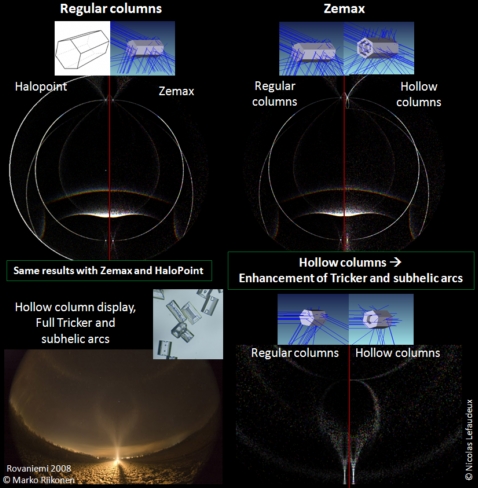
I ran some simulation of halos created by hollow columns. Usually, hollow columns are considered to be poor halo makers, reducing the probability of getting rare arcs. I have simulated hollow columns display using Zemax.

Zemax is commercial software used for optical design. Its primary purpose is design and optimization of optical systems. It allows only static simulation, but I wrote a few macros to simulate halos. The main advantages are that you don’t need to compute yourself all the optics laws, just to concentrate on the halos, and it is very flexible software. I have been able to simulate displays from twinned and complex crystals. Its main disadvantage is that it is very slow compared to dedicated software like Halopoint. I have compared the two software and they give the same halos, so the optics inside is really the same. Crystals used to simulate hollow columns keep their crystalline faces for the hollow parts. In real crystals, the holes appear to be more rounded and smooth. The halos simulated are so from ideal hollow columns. Simulation shows that, quite unexpectedly, hollow columns strongly enhance complex arcs in the anthelic direction. For instance, Tricker and subhelic arcs are much more prominent than with regular columns. Marko Riikonen pointed out a display with samples showing lots of hollow columns that had strong Tricker and subhelic arc. Simulations with hollow columns are quite consistent with the display.

I still don’t really figure how these complex raypaths can have increased probability with hollow columns, but simulations definitely show it.

Nicolas Lefaudeux

Saturday, 8 January 2011

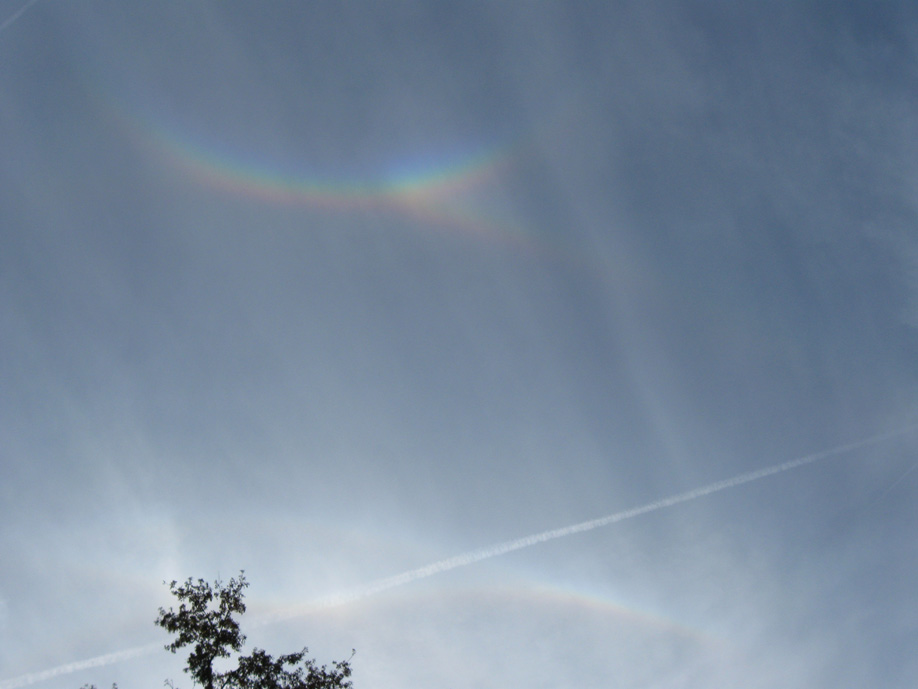
Lowitz arcs from Florida

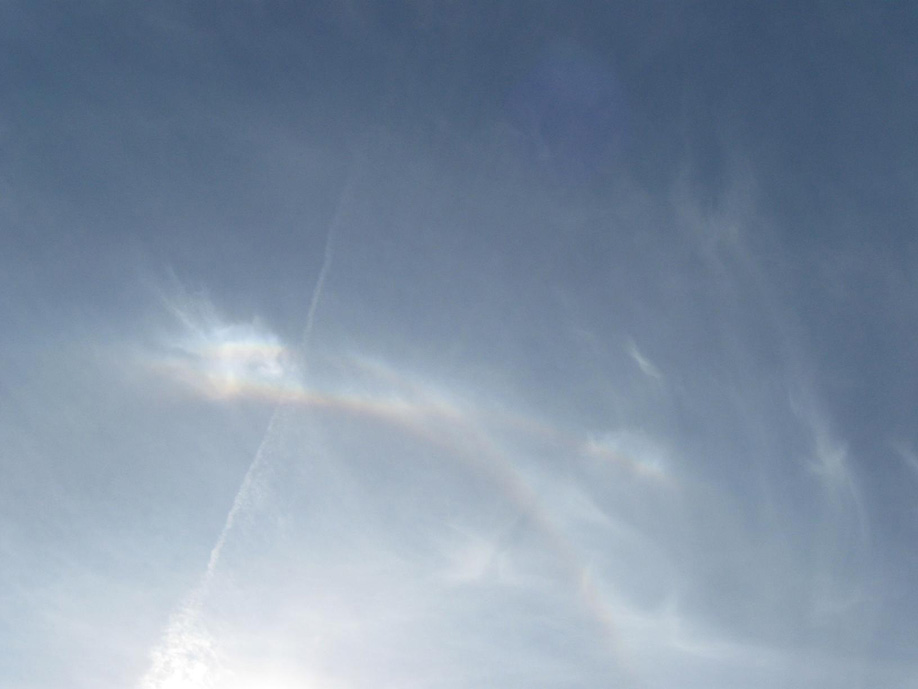
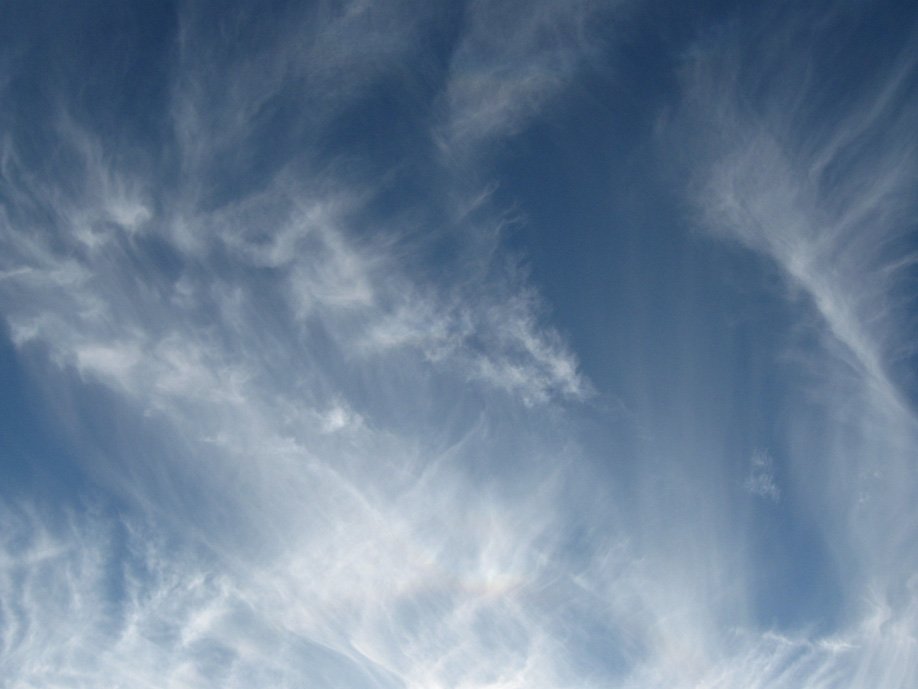
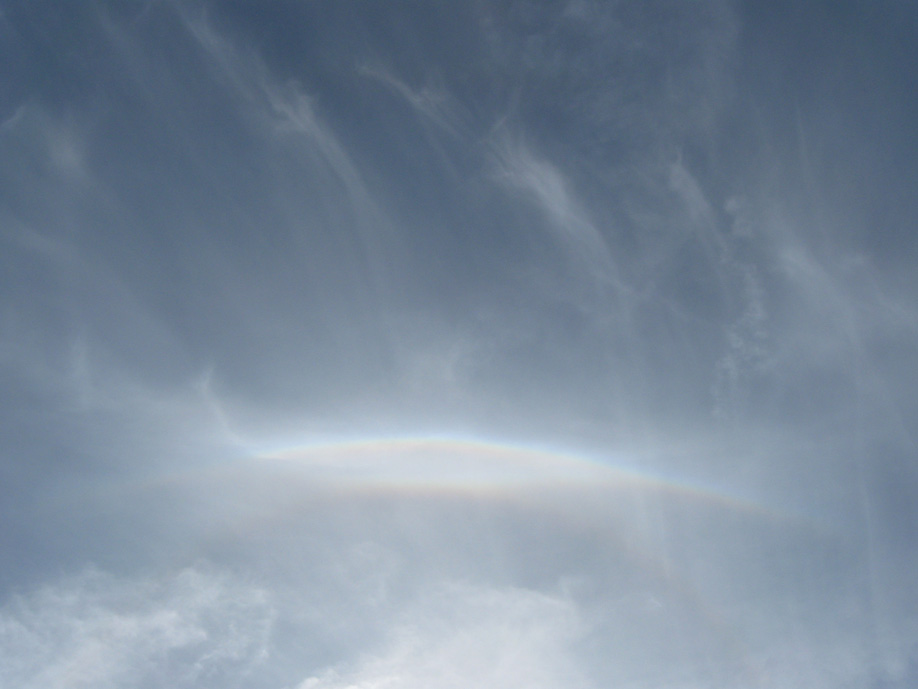
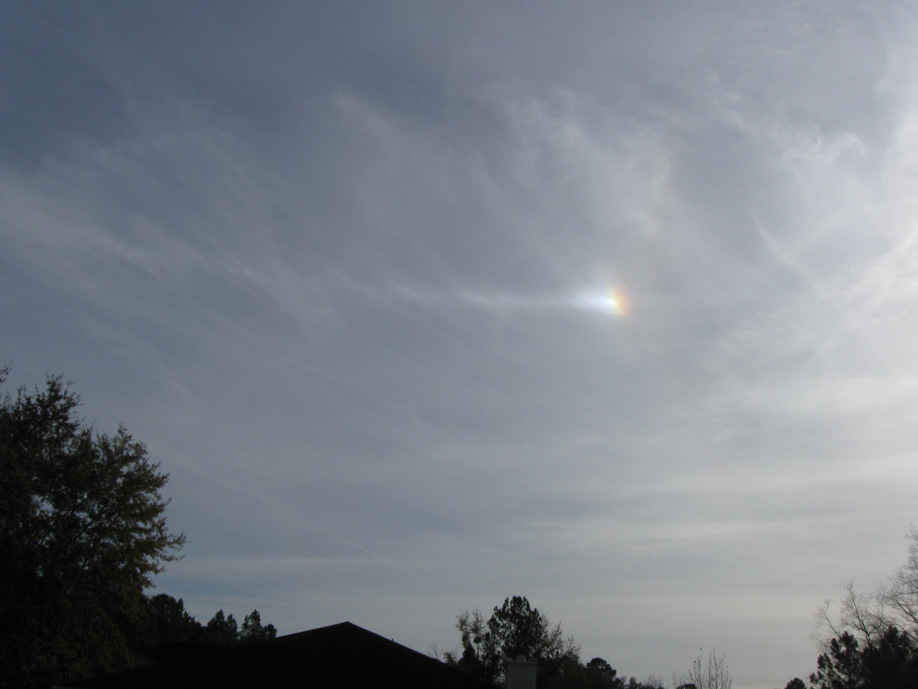
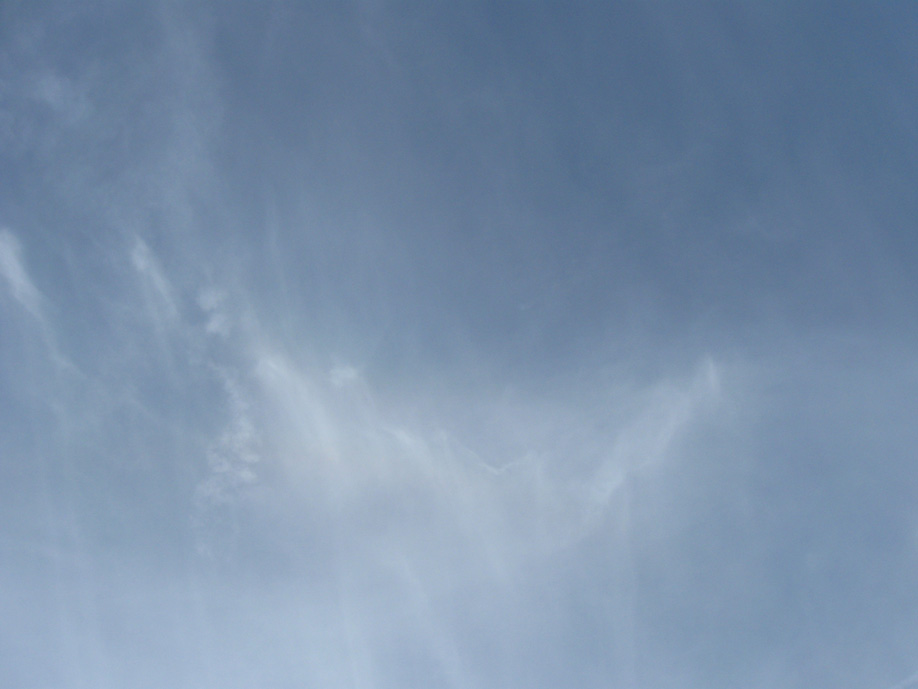
Nick Beck has sent this high cloud halo display that he observed on Christmas eve in Florida. The sun elevation was 31 degrees when it started and the display ended when the sun was 7 degrees above the horizon, lasting a little over 3 hours. The observed halos include Lowitz, upper sunvex and suncave Parry arcs ( 1 ), possible Wegener ( 2 ) and helic ( 3 ) arcs, and infralateral arc ( 4 ),among others ( 5 - 6 - 7 - 8 - 9 - 10 - 11 )