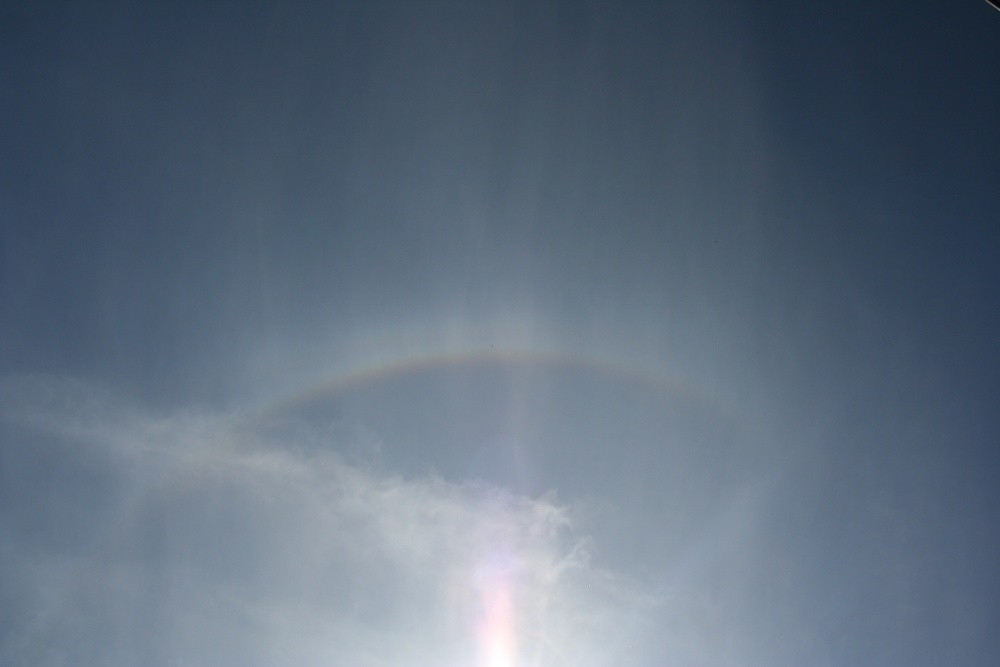
On 26 July 2009, at a sun elevation of 60.1°, I observed a second arc above the 22° halo and complete circumscribed halo ( 1 ). Besides it, there was also a CHA, and later a parhelic circle appeared. Further haloes were not present. At this sun elevation the Parry arc and the 23° plate arc are in similarly position, a precise distinction is very difficult, particularly that other observers reported further Parry arcs and other pyramidal haloes (9° and 18° halo), too. As the complete form of the arc can more or less be seen in the usm-ed image, I tend to Parry arc. This would actually be the Parry arc at highest sun elevation in the German 24-year statistic. ( 2 - 3 - 4 )
Text: Claudia Hinz
Friday, 4 September 2009
Thursday, 3 September 2009
Infralateral arc at high sun elevation
Not everything that is apparently a circumhorizontal arc is really one. I saw this halo on 8 July 2009 on Mount Spitzstein (1596m) at the German-Austrian Border. Besides a complete circumscribed halo, a reddish brightening appeared in the CHA-area. I was very delighted to see my first CHA this year, but the arc became longer and rounder ( 1 ). It was obvious that the arc was not parallel to the horizon. Therefore it had to be an infralateral arc. The sun elevation was 60.6°. ( 2 - 3 )
Text: Claudia Hinz
Text: Claudia Hinz
Friday, 28 August 2009
Halos on MMTO Sky Camera
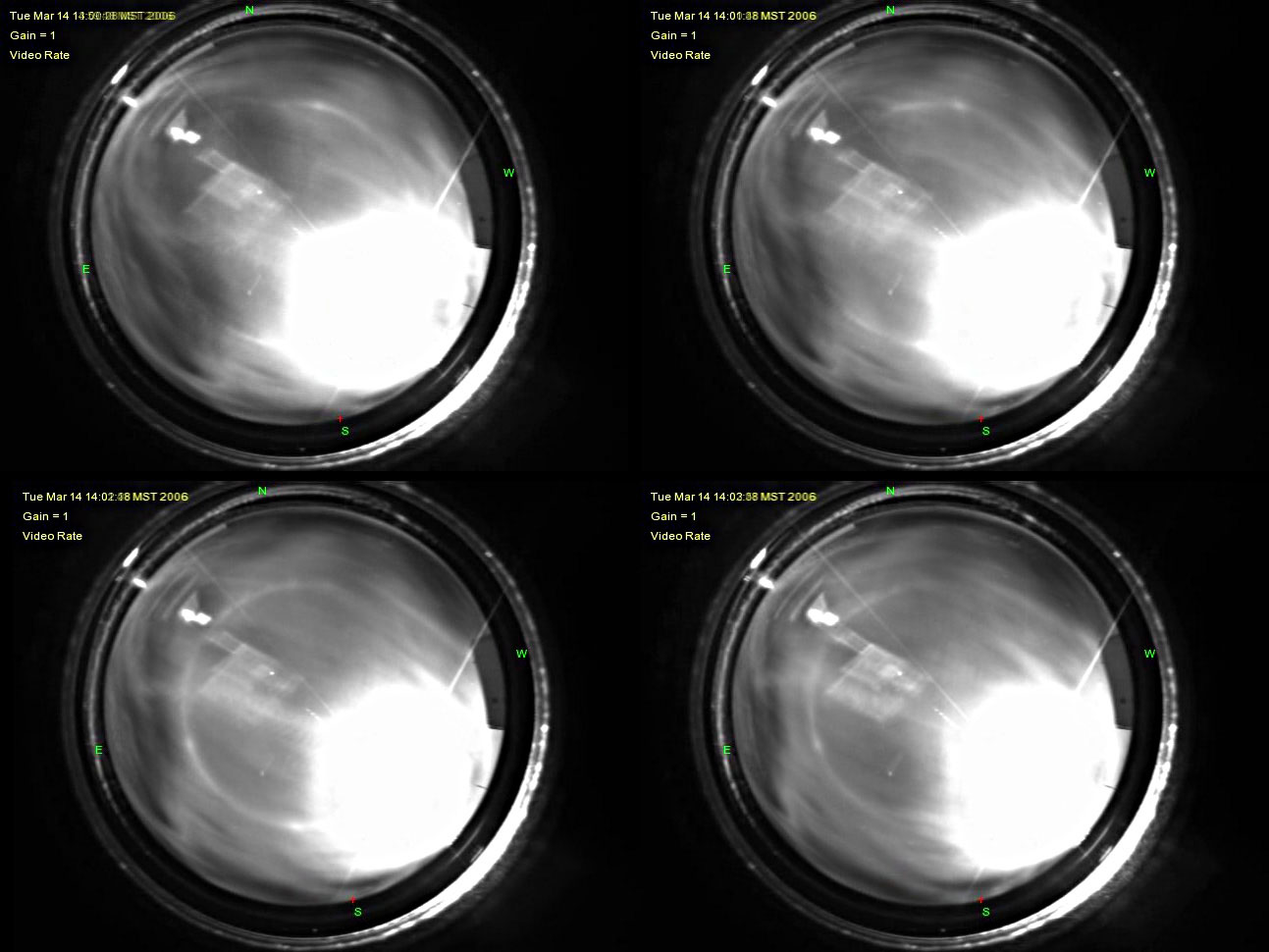
MMT Observatory in Arizona has an automatic all sky camera that records the sky day and night. Archived videos are available from 2006 ( 1 ). Halos are visible in these recordings (although many displays are lost to the overexposure). Here are some examples:
- 22° halo / circumscribed halo. In the beginning possibly 9° halo ( 2 )
- Parhelion and patches of parhelic circle starting at 15:46 ( 3 )
- Parhelic circle starting at 13:58. Also 120° parhelion appears. The image above shows 60 seconds stacks of the display ( 4 )
- Parhelic circle appears at 21:15 ( 5 )
- 22° halo and some upper tangent arc, best starting at 02:00 ( 6 )
Ágnes Kiricsi, Marko Mikkilä and Mónika Landy-Gyebnár went through several months of the recordings listing the ones with halos ( 7 - 8 - 9 ). In ( 7 ) the best displays are pasted orange. Much of the MMTO Sky Camera material is still unchecked with regard to halos, certainly there are some decent displays to be found.
Thursday, 27 August 2009
Time lapse halo clips from Thailand

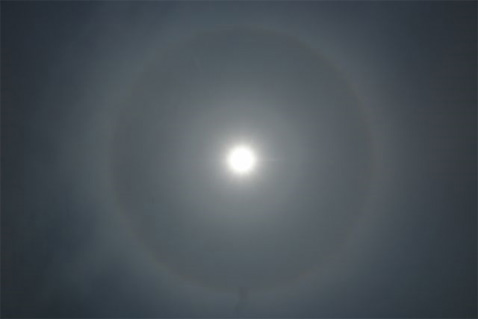
An avid atmospheric optics photographer, Pitan Singhasaneh has recently started experimenting with time lapse halo photography. Even though the displays are not special, the cloud movement and changes in halos create its own kind of magic. Pitan's videos are available at his Time-lapsed Photogaphy site ( 1 ). The photo above is from one of these displays, showing a 9° halo. If you like to see how halos in general look in the tropical climate of Thailand, see Pitan's photos from 2008 and 2009 ( 2 - 3 ).
Tuesday, 25 August 2009
Riddle
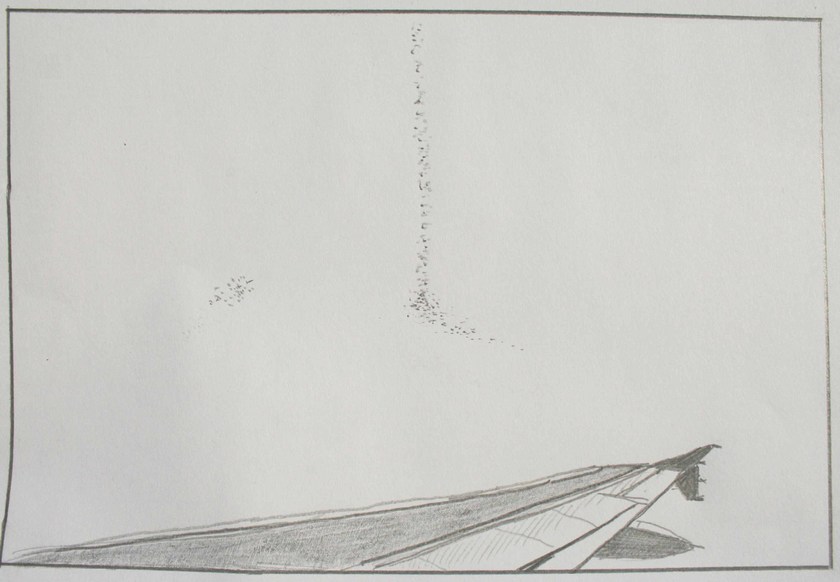
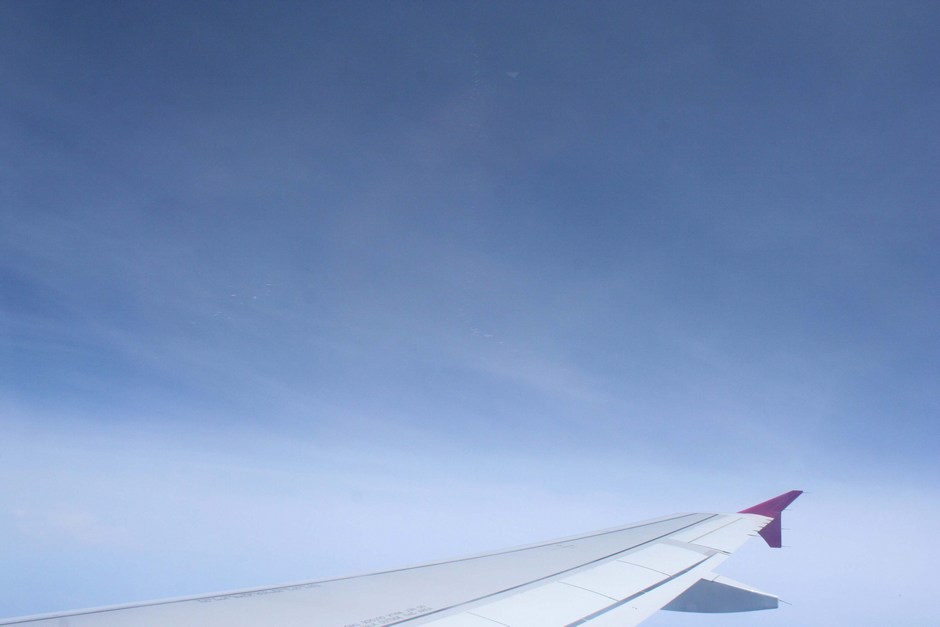
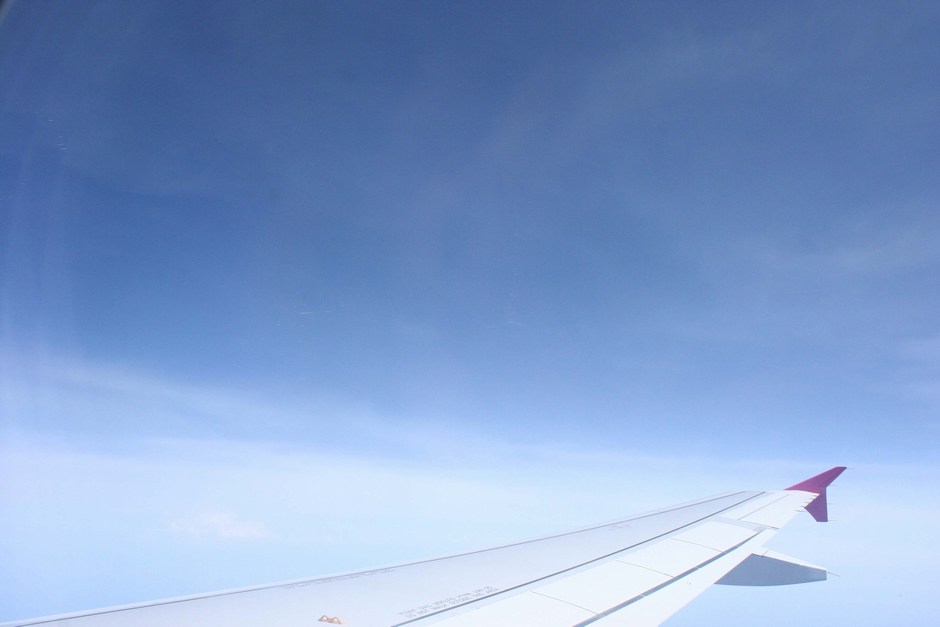
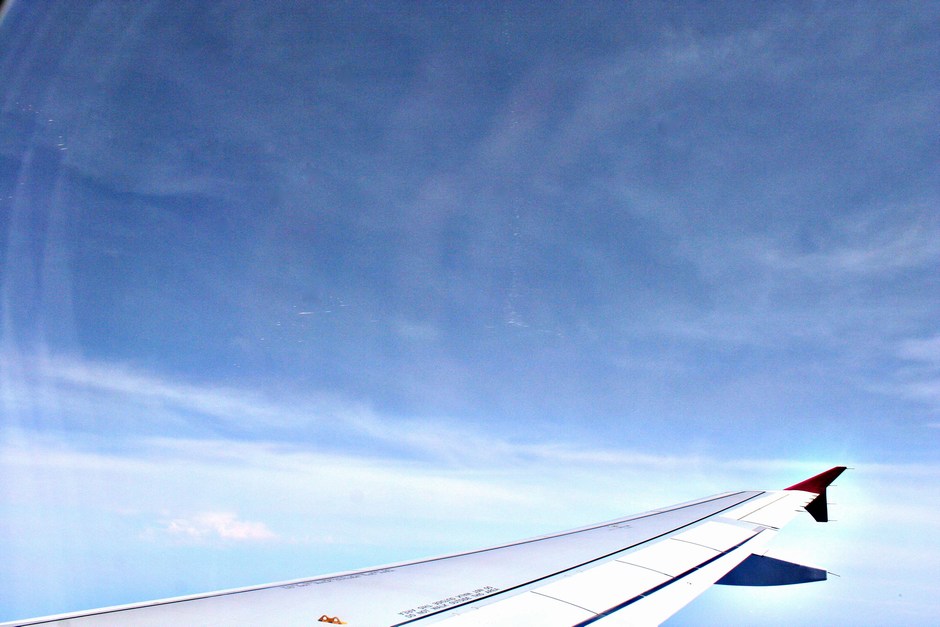
On 8 August, I was flying from Barcelona to Hungary, when I saw a faint pillar of ice crystals glistening close to me outside the window, at right angle to it. The pillar was white and the crystals were so near that I could see them individually. The sun was behind the plane at 54 degs elevation. The display lasted two or three minutes. Ideas of what it could have been are welcome.. Two original photos and their usm-ed versions are attached. Note also the other patch of glistening crystals to the left of the pillar ( 1 - 2 - 3 - 4 ).
Sunday, 16 August 2009
20° column arc
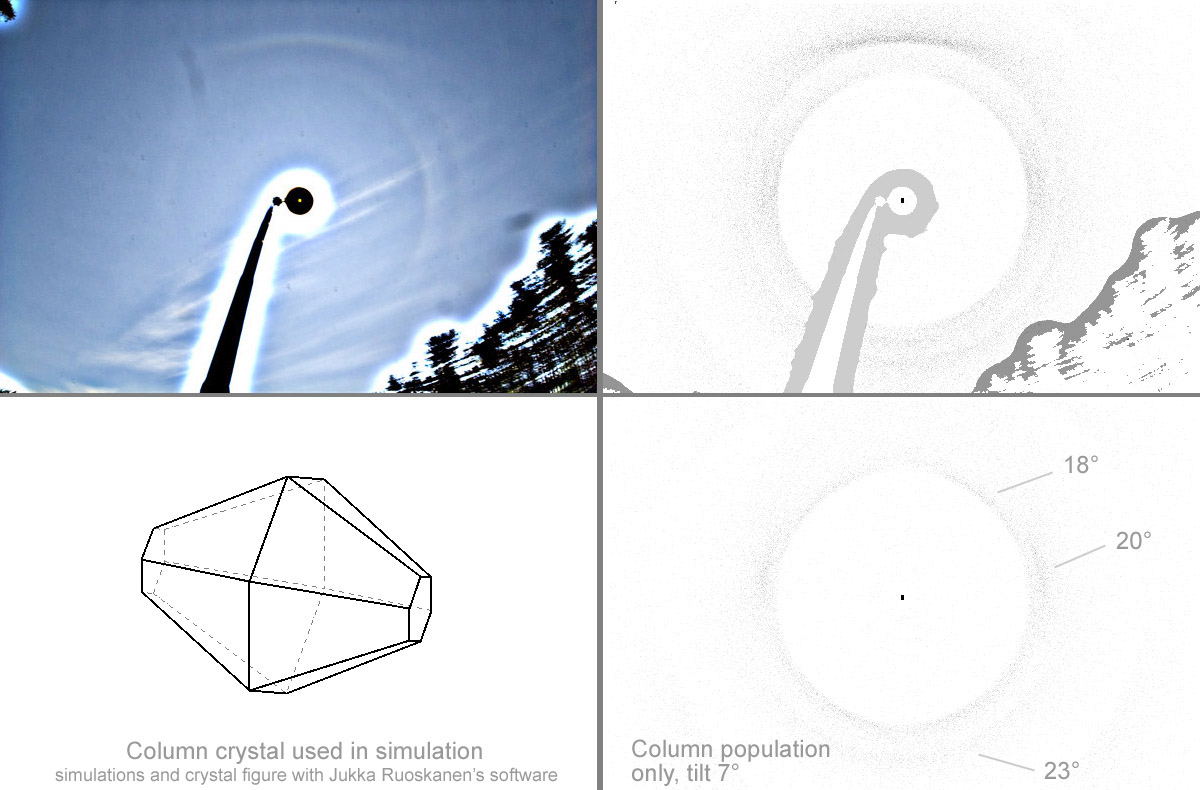
This minor odd radius came with a surprise after stacking. Outside the 18° halo / plate arc there seems to be a faint, but rather well defined 20° column arc. As there is no sign of 9° stuff, crystals had no middle prism which is rather rare situation. The display was observed on August 9 in Kontiolahti.
Thursday, 13 August 2009
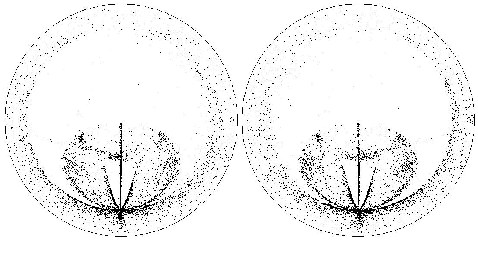
Lars Gislén's streetlight halo simulator
The halo application simulates streetlight halos ( 1 ). It can handle plate and column crystals as well as Parry oriented crystals. It can generate stereo pictures both for viewing in a stereo viewer or directly with "crossed yes". The application can also generate a data file with the 3D location of the crystals involved in the display that can later be viewed in a separate 3D viewer.
There is a short PDF manual together with an explanation of how the halo is simulated. Finally you can download the (rather messy) Java source code.
Detailed (large recycle value) halos may take the order of one hour to simulate. With the least detailed (recycle = 1) setting it takes much shorter time.
There are two implementations of the halo applications, one for Macintosh OS X 10.4+ and one for Windows. A Windows machine may need to download the Java Runtime Environment (JRE) that is available free ( 2 )
Text: Lars Gislén
There is a short PDF manual together with an explanation of how the halo is simulated. Finally you can download the (rather messy) Java source code.
Detailed (large recycle value) halos may take the order of one hour to simulate. With the least detailed (recycle = 1) setting it takes much shorter time.
There are two implementations of the halo applications, one for Macintosh OS X 10.4+ and one for Windows. A Windows machine may need to download the Java Runtime Environment (JRE) that is available free ( 2 )
Text: Lars Gislén
Subscribe to:
Posts (Atom)