Saturday, 10 September 2011
Plate Arcs from Japan
These pyramidal crystal halos were observed by Anthelene over Sakaiminato city in West Japan. The most interesting features of this high cloud display are the 9°, 20°and 24° plate arcs. Marko Riikonen has made a simulation with HaloPoint2.0 ( 1 ), according to him, the 20° plate arc had been photographed only once or twice in high clouds before. More of Anthelene's images can be seen on her website: http://bluemomenttime.blog89.fc2.com/blog-entry-442.html
Tuesday, 21 June 2011
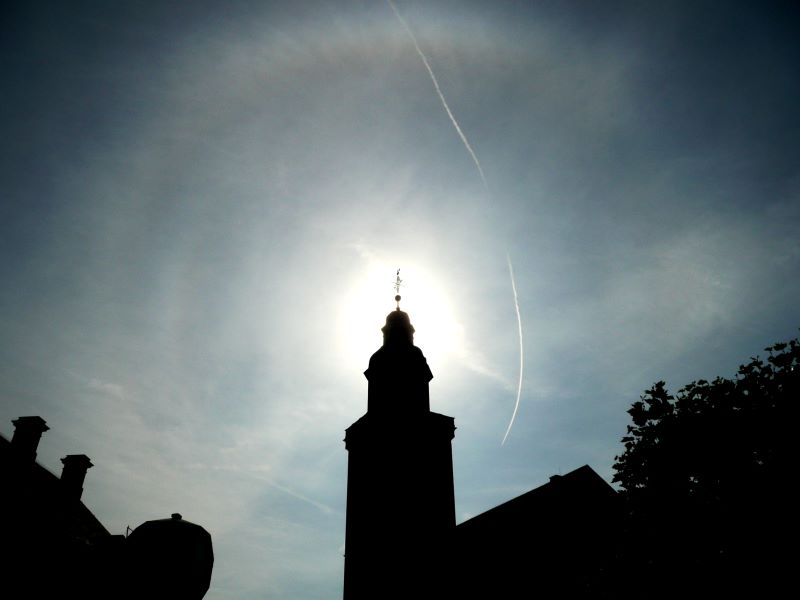
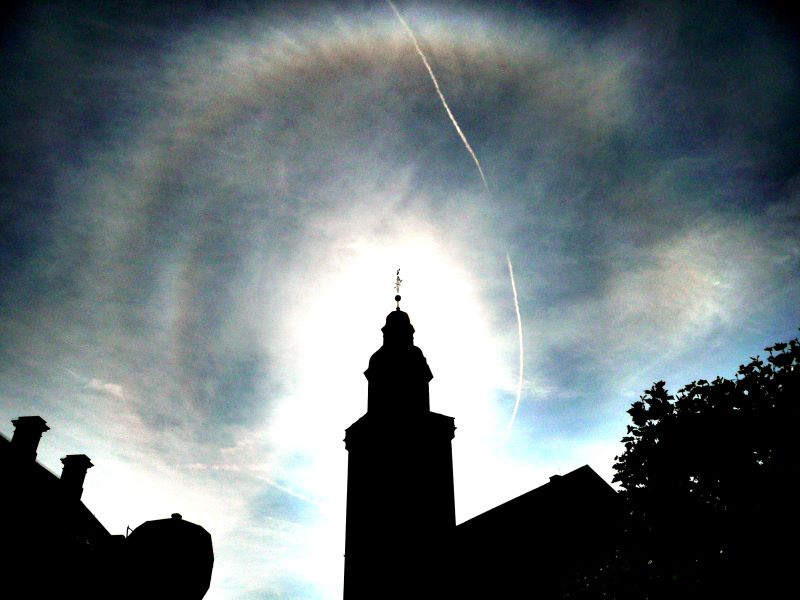
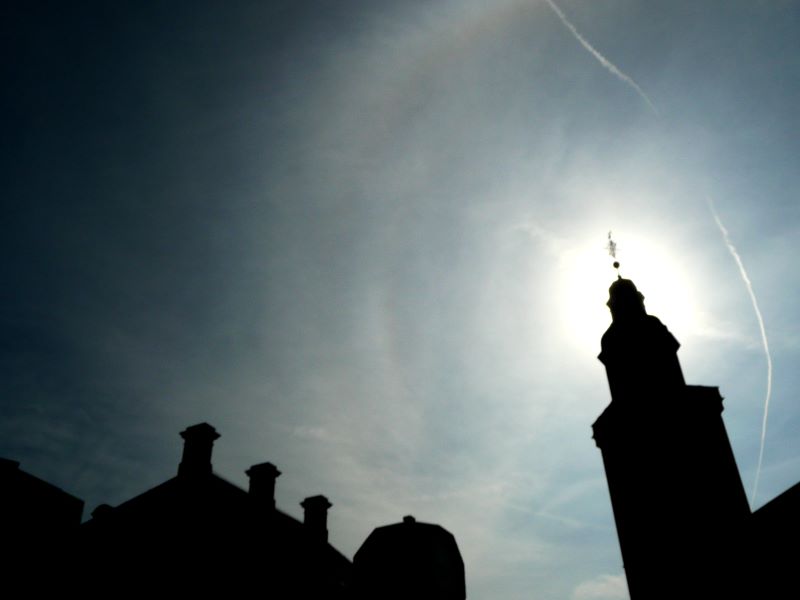
Pyramidal halos over Frankfurt am Main
Andreas Zeiske observed a pyramidal halo on 6 June 2011 in Frankfurt am Main. In the images, the 22° halo, 18° halo and the left 18° lateral arc can be seen about the St.-Katharinen-Church. The phenomenon formed on a thin field of Cirrus clouds and lasted for 10 minutes at around 08.00 CET. About 5 hours later a cold front with rain showers and thunderstorms swept across the city of Frankfurt. ( 1 - 2 )
Andreas Zeiske, Germany
Sunday, 12 June 2011
Atmospheric Phenomena Blog
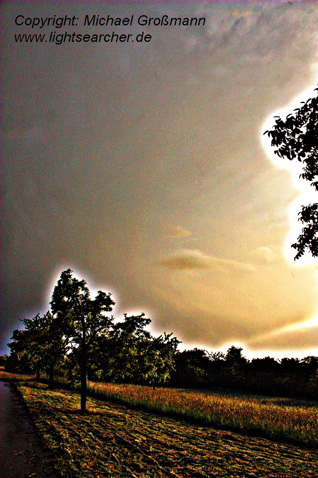
The blog on atmospheric optics has moved to a new address ( 1 ), and has recently been updated with many interesting observations. As a teaser, Michael Großmann's image of a tertiary order rainbow can be seen on the right.
Tuesday, 7 June 2011
Sunday, 5 June 2011
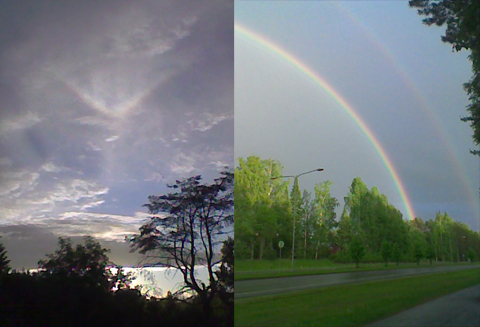
Simultaneous upper tangent arc and rainbows

On 4 June 2011 Pietari Puranen observed these rainbows in Jyväskylä. When he turned around to see the sky around the sun, he observed an upper tangent arc. Remarkably, the arc formed in virga precipitating from the same low clouds around the rainbow forming cumulonimbus. It is rare to see halos in virga so close to rainbows.
As column crystals are formed in temperatures relatively close to 0 degrees Celsius we may assume the Virga has been born in temperatures around, say, -4 to -9 degrees Celcius. At least in those temperatures diamond dust close to the ground seems to most often exhibit column crystals.
Thursday, 2 June 2011
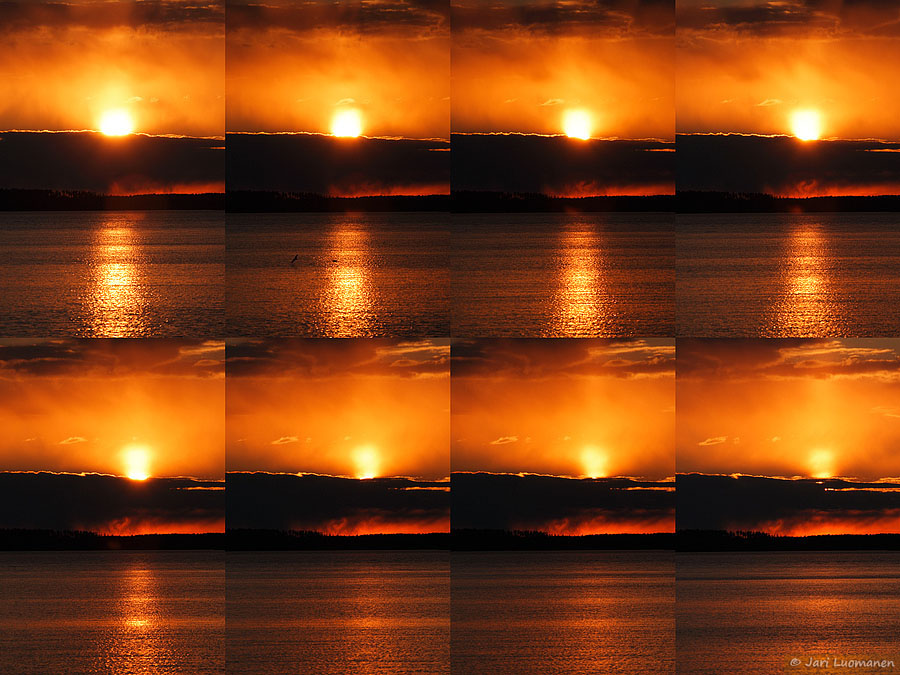
Double sun effect
On May 1st 2011 cumulonimbus clouds precipitating hail were commmon. These clouds exhibited clear praecipitatio and later in the evening they featured prominent virga. In these virga a sun pillar formed and as the sun descended behing stratocumulus a double sun effect was seen. A series of images is provided to see the progression of the effect. The real sun can be seen descending behing the stratocumulus.
The first observation of this effect was by Giovanni Cassini in 1693 (see e.g. Riikonen 2011 (1)). By clicking the above image a larger version can be seen. A full image gallery is available online (2). Marko Riikonen also captured images from the other side of the lake (3).
Monday, 30 May 2011
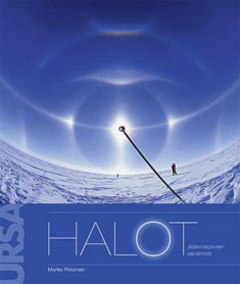
New book on halos

The Finnish Astronomical Association URSA has just published a new book on halos by Marko Riikonen. This book combines the latest halo science with stunning images from all around the world.
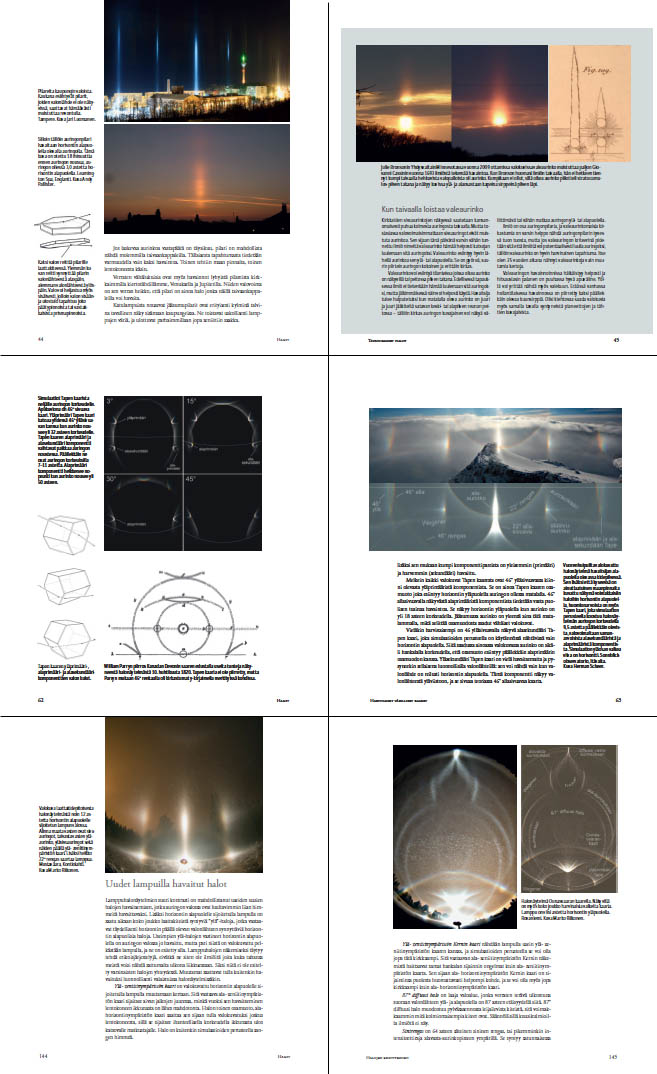
Spanning 168 pages, the book presents, illustrates and analyses all the known (and the less well known!) halo forms in great detail. In addition, the newly made discoveries and methodologies concerning spotlight displays are discussed in depth. Many historical displays are also included as a reference. Particular care has been put into preparing the beautiful computer simulations that are used to explain the ice crystal populations behind each display.
The variety of the images is striking and Riikonen has obviously spent a lot of time in finding great examples. Luckily the quality of printing matches these images: I have rarely, if ever, seen a print job this good. Even the faintest halos can be distinguisted in the images.
As Riikonen is a long-time expert in the field, the substance of the book is solid and provides everybody from beginners to experts with new insights about halo science. Being such a significant contribution to the field of atmospheric optics one can but hope for a quick release of an English language edition.
A few select pages can be previewed online (1). Publisher information (2).
Riikonen, Marko (2011) Halot. Jääkidepilvien valoilmiöt. [Halos. The optical phenomena of ice crystal clouds]. Tähtitieteellinen yhdistys URSA ry, Helsinki.
Subscribe to:
Posts (Atom)